Solar water pumping is a method of using solar energy to power water pumps, providing a sustainable and environmentally friendly solution for various water pumping needs.
Solar water pumping systems consist of solar panels, a pump, and sometimes a storage tank. The solar panels collect sunlight and convert it into electricity, which powers the pump. The pump then draws water from a water source, such as a well or a reservoir, and delivers it to where it's needed, such as for irrigation, livestock, or domestic use.
Domestic Use: Supplies water for household needs in off-grid or rural areas, improving quality of life and sanitation.
Livestock Watering: Ensures a reliable water supply for livestock, improving animal health and productivity.
Irrigation: Provides a sustainable solution for agricultural irrigation, helping farmers increase crop yields and reduce dependence on fossil fuels.
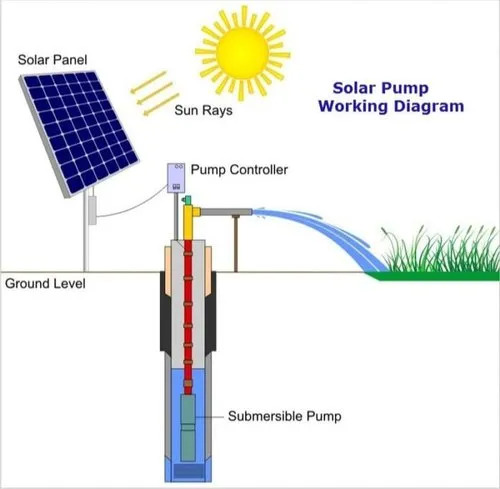
Solar water pumping is a great alternative to traditional methods because it saves money by using free solar energy instead of electricity. It's also good for the environment since it doesn't produce harmful emissions. These systems work well even in remote areas without electricity, providing a steady water supply. Plus, they're easy to maintain because they have simple designs with fewer parts. Overall, solar water pumping is a smart and sustainable choice for getting water where it's needed.
Solar water pumping harnesses the power of the sun to provide a sustainable and cost-effective solution for water pumping needs. Whether for irrigation, livestock watering, or domestic use, solar water pumping offers a reliable and environmentally friendly alternative to traditional pumping methods.